Is Apple Search Ads Worth It? The Math for Small Apps
The short answer
Is Apple Search Ads worth it for a small app? The break-even maths
Only when a tap earns more than it costs. The most you can pay per tap is what a payer is worth, times the share of downloads that pay, times the share of taps that install. For Coral, a made-up freemium scanner, that is about 34 cents against a typical $1.23. At a hard paywall rate it is about $1.72. Fix the payer rate before you raise the bid.
Key facts
- $1.23Typical cost of one tap for US utility apps on Apple Search Ads in 2025 (median).AppTweak, Apple Ads benchmarks 2026, 19 August 2026
- 63 in 100Taps that became installs for a typical US utility app campaign in 2025 (63.2%).AppTweak, Apple Ads benchmarks 2026, 19 August 2026
- 85%What you keep of each sale in Apple's Small Business Program, which you have to apply for.App Store Small Business Program
- 2.1% vs 10.7%Downloads that pay within 35 days: the typical freemium app against the typical hard paywall app.RevenueCat, State of Subscription Apps 2026
- $2.84Typical cost of one install from a search for your own app's name (US apps, 2025).AppTweak, Apple Ads benchmarks 2026, 19 August 2026
Chapters
Transcript
Edited for readingCoral is a fictional document scanner app; its numbers are illustrative arithmetic on real medians. Every other number comes from a real source, listed under Sources.
Is Apple Search Ads worth it for a small app?Watch from 0:00
Apple Search Ads: $1.23 for one tap. That's last year's typical price for US utility apps, in a study of about 2,800 advertisers. Coral, a made-up scanner app, wants to pay it.
Your small app is live. Is Apple Search Ads worth it? Plenty of developers run a small test, get some downloads, and call it a waste.
Here's the short answer. At average prices, a typical freemium app loses money on every tap. But not all of them.
Three things decide it. What a tap costs, what a payer is worth, and how many downloads pay.
What does a max CPT bid buy you?Watch from 0:38
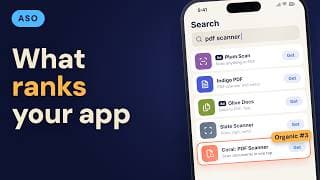
Apple Search Ads is now called Apple Ads. It puts your app at the top of App Store search. You choose the searches. You set the most you'll pay for one tap. That's your max cost per tap. In the Advanced dashboard, it's the max CPT bid, on the ad group or the keyword.
You don't always pay that ceiling. Apple's dynamic pricing sets the real price, and it can be lower.
And your bid isn't the first test. Relevance is. If your app doesn't match the search, Apple won't show it, whatever you bid.
There's a simpler version too. Basic charges per install, with a monthly cap per app. But you can't choose a single keyword.
Our take: if you're testing which searches pay, start with Advanced.
So a tap is what you buy. How many taps become downloads? Apple says most do, for ads at the top. For US utility apps, the typical campaign saw 63 in 100. So most taps become downloads.
Now, what is one download worth?
What is one paying user worth?Watch from 1:41
Coral's yearly plan costs $29.99. Say every paying user picks it.
Apple keeps a cut. In its Small Business Program, you keep 85%. It's for smaller developers, and you have to apply.
So each paying user is worth about $25 to Coral in year one. That's the most Coral can spend to win one paying user, and still break even. Not one download. One payer.
Real apps also sell weekly plans, and some payers leave early. So that's the best case for year one. And most downloads never pay.
How much can Coral pay for a tap?Watch from 2:18
So how many do? RevenueCat tracks a huge set of subscription apps. Take freemium apps like Coral. The typical one turns only a tiny share of downloads into payers.
Multiply that by what a payer is worth. One download is worth pocket change. Then drop the taps that never install.
Before the answer, take a guess. What's the most Coral can pay for one tap?
About 34 cents. That's far below the price from the start of this video. So at average prices, Coral loses money on the average tap.
That's what those small tests find. The downloads come. The money doesn't. So never judge Apple Ads on cost per download. Judge it on cost per payer.
But that opening price is a middle price across every kind of search. Some searches behave very differently.
Which searches are worth buying?Watch from 3:15
Campaigns fall into a few kinds. Your own app's name. Generic words, like PDF scanner. And competitors' names.
AppTweak split last year's US data by kind. People searching your own name tap and install the most. A brand install cost about $2.84.
A competitor's name is the opposite. Few people tap, fewer install, and each install costs far more.
So where should a small app start? Not on competitor names. It pays the most there, on searches where it's the least relevant app. Start with your own name and a handful of exact generic words. That's where a small app is most relevant.
But look at Coral again. At the middle price, even its own name costs several times what a download is worth.
So is Apple Ads only for big apps? Not quite. The bid isn't the number that moves the most.
What changes the answer?Watch from 4:11
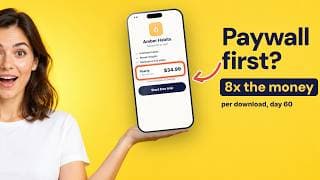
Go back to the payer rate. Freemium apps give everything away first. Apps with a hard paywall ask you to pay, or start a trial, before you use them. In the same RevenueCat data, the typical one turns about 11 in every 100 downloads into payers.
Now run Coral's maths again at that rate. A paying user is worth the same. Downloads just pay far more often. So one tap is now worth about $1.72. That's above the middle price.
Same app, same price, same ads. The tap stopped losing money. Nothing about the ad changed. Only what the app does after the download.
We dug into that gap in our video, Why Your Freemium App Isn't Making Money (And How To Fix It).
Now, what this can't tell you. These are medians across thousands of different apps. Hard paywall apps aren't freemium apps that switched. So read this as a direction, not a promise.
How do you test your own app?Watch from 5:05
Here's the one-line test. The most you can pay for a tap is what a payer is worth. Times how many downloads pay. Times how many taps install.
Use your own numbers, not the medians. Payer value comes from your price and Apple's cut. The payer rate comes from your subscription dashboard. Tap to install comes from a small test. Use your own name and a few exact words, for a couple of weeks.
If the answer is below what a tap costs you, don't raise the bid. Fix the payer rate first.
Coral never touched its bid. It changed who pays. Apple Ads doesn't decide whether a small app wins. What happens after the download does.
Sources
- AppTweak, Apple Ads benchmarks 2026 (about 2,800 US advertisers, 2025 data, search results, medians) (19 August 2026)
- RevenueCat, State of Subscription Apps 2026 (115,000+ apps, 2025 data, day 35 download to paid, medians)
- Adapty, Apple Ads for subscription apps 2026 (8,000+ apps, 90 countries, 2025 data)
- Apple Ads Help, Set and adjust bids
- Apple Ads Help, Search results
- Apple Ads Help, Compare Apple Ads solutions
- Apple Ads News (rename to Apple Ads) (14 April 2025)
- App Store Small Business Program
Caveat: Vendor medians are the vendors' data, not Apple's, and are not weighted by spend. Hard paywall apps are different apps, not freemium apps that switched. Coral's sums assume every payer picks the yearly plan in year one.